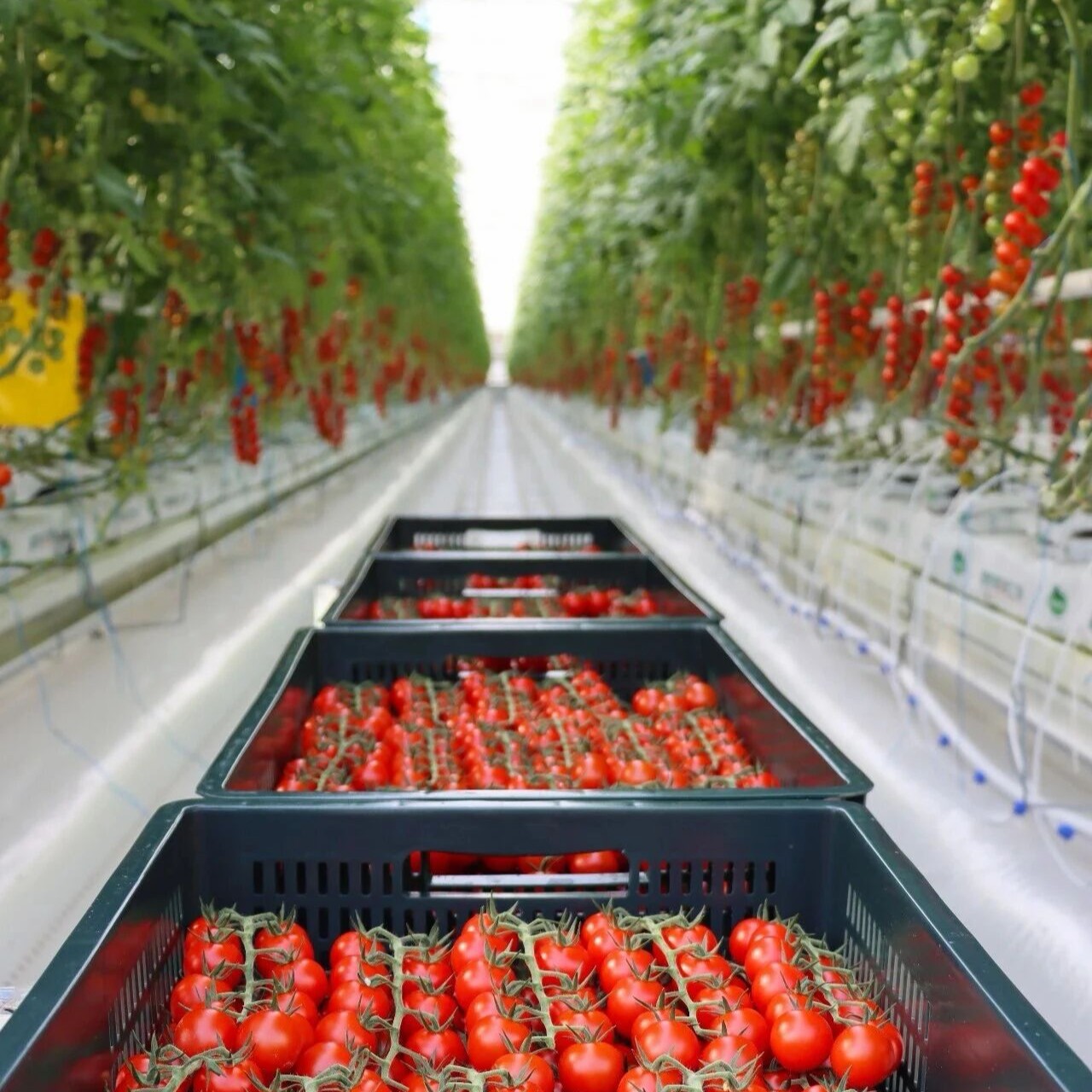
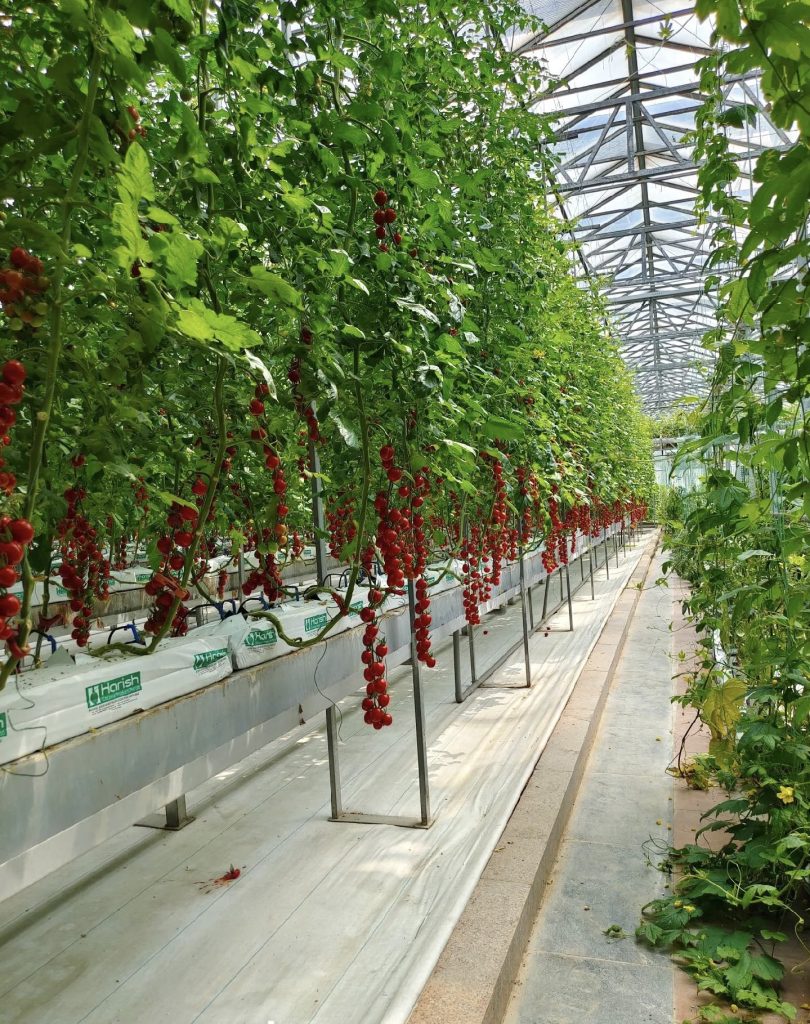
n hot, high-light and arid zones such as tropical deserts, the biggest challenge for tomato greenhouses is often not whether cooling is achievable, but whether indoor climate can be stabilized.
For tomato cultivation environments featuring scorching daytime heat, large diurnal temperature swings and dry air, ventilation alone sometimes fails to meet crops’ demands for balanced temperature and humidity. What tomatoes truly require is not merely low temperatures, but a more stable, controllable microclimate tailored to their transpiration and growth.
1. Why VPD Is Attracting Growing Attention in Tomato Cultivation
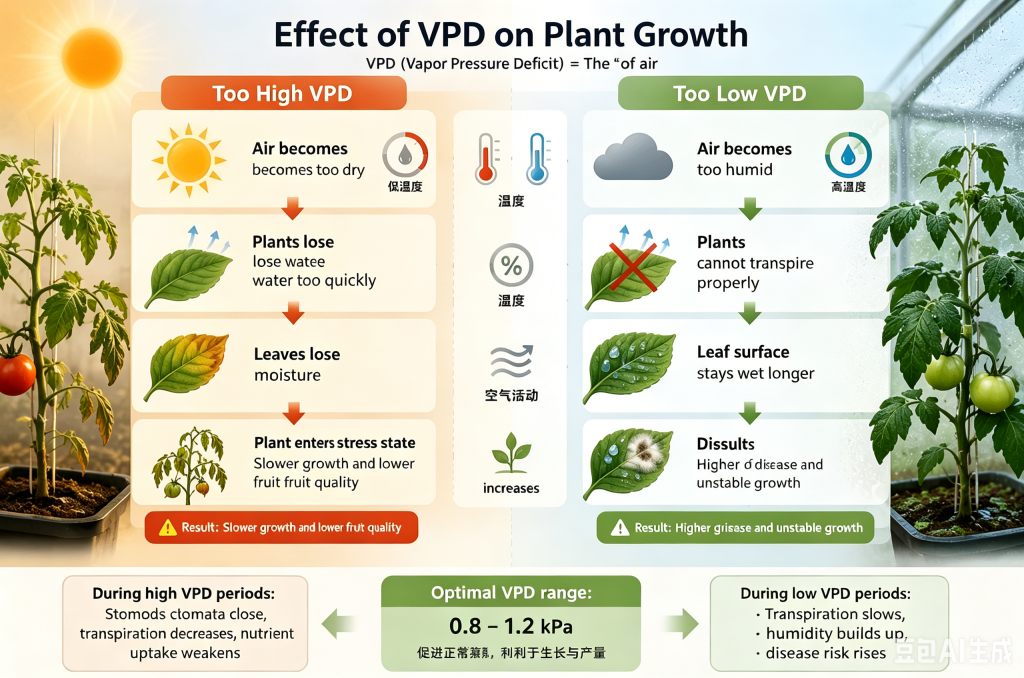
VPD, simply put, refers to the air’s capacity to draw moisture away from plants.
It is not an isolated parameter, but a core indicator that correlates temperature, humidity and crop transpiration status as a whole.
For tomato plants, an excessively high VPD indicates overly dry air. This imposes heavy transpiration stress on crops, causing leaf water loss and triggering plant physiological stress.
Conversely, an overly low VPD points to excessive air humidity. Restricted transpiration will lead to stuffy conditions inside greenhouses and raise the risk of disease outbreaks.
In other words, tomato greenhouses do not require maximum humidity or extreme dryness. Instead, VPD must be maintained within a stable range optimal for crop growth.
This explains why VPD management has become a priority in modern high-quality tomato production, as it directly impacts the following factors:
- Healthy plant foliage expansion
- Normal transpiration processes
- Efficient uptake of water and nutrients
- Prevention of excessive moisture buildup within the greenhouse
- Consistent quality of harvested tomatoes in later growth stages
II. High-Pressure Fogging Systems Deliver Climate Balance, Not Just Water Spraying
Many people’s first impression of high-pressure fogging systems is that they are merely humidifiers.
This is a misconception. Professional high-pressure fogging systems atomize water into ultra-fine droplets under high pressure, dispersing them evenly throughout the greenhouse to enable precise climate regulation. Its core advantages go far beyond adding moisture, and include the following key functions:
- Boost humidity without surface water accumulation
The micro-fog droplets evaporate instantly to raise ambient humidity, while avoiding heavy water buildup and minimizing the risk of leaf wetting.
- Alleviate heat stress
Under high-temperature conditions, rapid evaporation of fine fog absorbs excess heat, effectively lowering peak heat loads inside greenhouses.
- Stabilize Vapor Pressure Deficit (VPD)
By synchronously regulating temperature and humidity, the system maintains growing conditions within the optimal VPD range for tomatoes and prevents drastic environmental fluctuations.
- Improve crop physiological performance
A stable microclimate facilitates balanced transpiration, water uptake, and nutrient transport in tomato plants, leading to uniform, consistent growth.
Therefore, high-pressure fogging systems are not auxiliary add-ons — they serve as precision environmental control tools essential to modern premium tomato cultivation.
III. Why Systemized Design Is Critical for 4.7 Hectare Projects
When a tomato farm expands to 4.7 hectares, a standalone piece of equipment is no longer sufficient; the entire climate setup must be engineered as an integrated system. The rationale is clear:
- Larger greenhouses suffer uneven microclimate distribution
As covered area expands, inconsistent temperature and humidity become widespread. Without tailored system design, growing conditions will drastically differ between front/back zones, perimeter edges, and central sections.
- Multi-unit equipment requires coordinated operation
High-pressure fogging cannot function independently. It must synchronize with ventilation, shading, cooling, irrigation, and automated control systems. Misaligned operation — such as overly rapid humidification or excessive cooling — will disrupt crop health.
- Large-scale cultivation demands refined management
The priority for a 4.7-hectare tomato project is not simply installing equipment, but ensuring all hardware actively supports stable production.
The integration of high-pressure fogging systems empowers growers to maintain predictable, controllable growing environments in hot and arid regions, rather than just adding an isolated humidification module.
IV. Why Tropical Desert Climates Benefit Most from High-Pressure Fogging Regulation
Regions with tropical desert climates share identical harsh growing conditions:
• Intense solar radiation
• Extreme high temperatures
• Very low relative humidity
• Severe evapotranspiration stress
If left unregulated, these conditions trigger a cascade of tomato growth issues:
• Rapid leaf water loss during daytime
• Excessively intense transpiration
• Elevated leaf surface temperature
• Unstable water and nutrient absorption
• Erratic flowering and fruit set
• Persistent physiological stress on plants
High-pressure fogging systems directly mitigate the two primary threats of desert agriculture: extreme dryness and intense heat. Rather than replacing ventilation, fogging works alongside air circulation equipment to build a complete climate control solution.
V. For Tomato Growers, Results Outweigh Hardware
Commercial tomato producers prioritize tangible operational outcomes over equipment specs, focusing on these core demands:
• Effective suppression of peak high temperatures
• Stable indoor humidity levels
• Optimized VPD management
• Uniform, balanced plant development
• Reduced heat stress and physiological fluctuations
• Consistent yield and fruit quality year-round
High-pressure fogging systems directly address all these priorities. They transform greenhouse environmental management from reactive crisis control into proactive, predictive regulation — a game-changing advantage for premium commercial tomato production.
VI. Hongqiangsheng Greenhouse’s Philosophy: A Superior Greenhouse Delivers Consistent Cultivation, Not Just Basic Growing
In today’s protected agriculture industry, competitiveness is no longer measured by fast construction speed, but by deep agricultural production expertise. A truly valuable climate system is not defined by complex components, but its ability to resolve real cultivation challenges:
• How to regulate extreme heat
• How to adjust low humidity
• How to stabilize VPD levels
• How to promote vigorous, stress-free plant growth
• How to sustain consistent long-term production
Our integration of high-pressure fogging systems into this 4.7-hectare tropical desert tomato project stems from this core principle: deliver fully controllable greenhouse climates, stabilize tomato growth performance, and align growing conditions with the standards of high-value commercial tomato farming.
Conclusion
Success in tomato cultivation across hot, arid regions does not rely on stacking more equipment — it hinges on granular, refined climate management.
High-pressure fogging systems are far more than simple humidifiers; they are pivotal technology that enables optimized VPD control, steady plant growth, and reliable production output for commercial tomato farms. For projects scaling to 4.7 hectares and larger, integrated system design vastly outperforms standalone individual machinery.
This is the core mission Hongqiangsheng Greenhouse upholds: leverage professional greenhouse engineering to convert complex, harsh climatic challenges into stable, predictable growing conditions for global growers.